By: Dr Elie Servan-Schreiber (Gynécologue-obstétricien) — 21/02/2026
Quick verdict
Why are some cheeses not recommended?
Pasteurized vs raw milk
Complete summary table
Hard cheeses
Pasteurized fresh cheeses
Raclette while pregnant
Cheeses to absolutely avoid
The gray area: morbier, tomme, cantal
Storage and hygiene
Our expert's opinion
The golden rule to remember
Pasteurized cheese + no rind = allowed. The vast majority of cheeses sold in supermarkets are made from pasteurized milk and are perfectly safe during pregnancy.
Soft cheese made from raw milk = prohibited. Unpasteurized soft cheeses (raw milk camembert, brie de Meaux, reblochon, mont d'Or) carry a risk of listeria contamination.
Hard cheese = allowed, even from raw milk. Comté, parmesan, emmental, and gruyère are safe thanks to their low moisture content, which prevents bacterial growth.
You are pregnant and wondering which cheeses you can continue to enjoy? You are not alone: the question of cheese during pregnancy comes up regularly during prenatal consultations. France has over 1,200 varieties of cheese, and it can be difficult to sort out what is allowed, what requires precautions, and what is strictly not recommended.
This complete guide reviews all popular cheeses -- from mozzarella to roquefort, from parmesan to camembert -- to help you continue enjoying yourself safely. Each recommendation is based on guidance from ANSES and CNGOF.
The main risk associated with cheese during pregnancy is listeriosis, an infection caused by the bacterium Listeria monocytogenes. This bacterium thrives particularly well in moist environments and can survive in the refrigerator, making it dangerous in certain soft cheeses.
According to French Public Health Agency, approximately 400 cases of listeriosis are reported annually in France, of which about thirty involve pregnant women. While this number may seem low, the risk is 20 times higher for pregnant women than for the general population. The consequences can be severe: miscarriage, premature delivery, neonatal infection, or in the most severe cases, fetal death.
Listeriosis during pregnancy often presents with flu-like symptoms (fever, fatigue, body aches), making initial diagnosis difficult. This is why dietary prevention is essential. Precautions also apply to other high-risk foods such as raw seafood or certain deli meats.
The risk of toxoplasmosis is sometimes mentioned regarding cheese, but it mainly concerns cheeses made with milk from farms where animals are in contact with cats. In practice, it is listeria that is the focus of most recommendations.
Pasteurization involves heating milk to a minimum temperature of 72°C for 15 seconds. This heat treatment destroys the vast majority of pathogenic bacteria, including listeria. A pasteurized cheese during pregnancy is therefore considered safe, provided that expiration dates and basic hygiene rules are followed.
Raw milk, on the other hand, has not undergone any heat treatment above 40°C. It therefore retains its natural microbial flora -- which gives it more complex flavors -- but also potential pathogenic bacteria. A raw milk cheese during pregnancy is not automatically prohibited, but you need to distinguish between hard cheeses (allowed) and soft cheeses (not recommended).
To know which cheese to eat during pregnancy, the label is your best ally. Look for the mandatory mention about the type of milk:
Tip: if no mention appears, the cheese is probably pasteurized (this is the case for most supermarket cheeses). When in doubt, turn over the packaging or ask your cheesemonger.
Here is the complete list of cheeses allowed and prohibited during pregnancy. This pasteurized cheese table covers the most consumed cheeses in France and Europe.
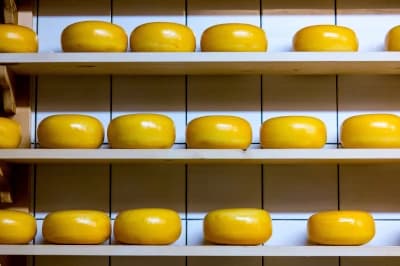
Cooked pressed cheeses are the safest category for pregnant women. Even when made from raw milk, their manufacturing process involves heating the curd above 50°C, followed by prolonged aging (several months, or even several years). This dual process -- cooking and drying -- considerably reduces the cheese's moisture content.
According to ANSES, Listeria monocytogenes needs a moisture level above 0.92 (water activity) to multiply. Hard cheeses have a water activity well below this threshold, making bacterial growth virtually impossible. This is why comté during pregnancy, parmesan during pregnancy, and emmental are safe choices.
Allowed hard cheeses:
In summary: if it is a hard cheese into which you could hardly push your thumb, it is very likely safe during pregnancy.
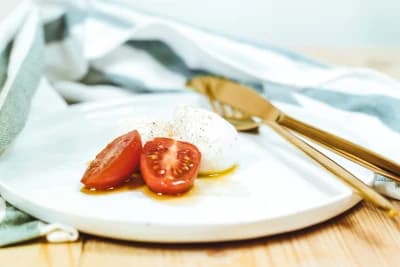
Pasteurized fresh cheeses represent the second major category of safe cheeses for pregnant women. They are made from pasteurized milk, have no rind, and are consumed shortly after production. The fact that the milk was heated to 72°C eliminates listeria and other pathogenic bacteria.
Fresh cheeses allowed during pregnancy:
In summary: all fresh cheeses from the refrigerated section of your supermarket that bear the mention "made from pasteurized milk" are allowed during pregnancy.
Raclette is one of the most sought-after dishes by pregnant women in winter, and for good reason: it is a convivial experience that is hard to replace. The good news is that you can eat raclette during pregnancy, provided you follow a few simple rules.
Raclette cooking reaches temperatures well above 70°C, which is sufficient to destroy Listeria monocytogenes and other pathogenic bacteria. The melted, bubbling cheese coming out of your raclette grill poses no infectious risk.
The same logic applies to fondue savoyarde. The cheese is brought to a boil (above 100°C in the center of the pot), which eliminates all bacteria. You can therefore enjoy fondue during pregnancy, provided you dip your bread well into the melted cheese and do not eat lukewarm cheese left on the sides of the pot.
Tartiflette is traditionally made with reblochon, a raw milk cheese. However, baking in the oven at 200°C for 30 to 40 minutes allows reaching temperatures well sufficient to destroy listeria. A well-baked tartiflette, where the cheese is bubbling and golden, is therefore acceptable during pregnancy. Make sure the reblochon is well melted in the center of the dish.
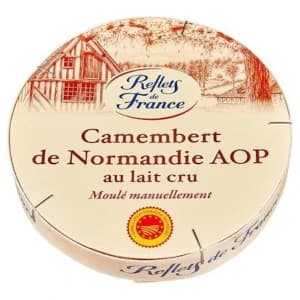
Two categories of cheeses are formally not recommended by ANSES and CNGOF during pregnancy: soft cheeses made from raw milk and blue cheeses. The combination of high moisture, lack of pasteurization, and short aging creates an environment favorable to listeria growth.
These cheeses present the highest risk of listeria contamination. Their high moisture content, combined with the absence of heat treatment of the milk, provides ideal conditions for bacterial proliferation. According to ANSES, these cheeses are responsible for the majority of cheese-related listeriosis cases.
Blue cheeses are streaked with internal molds (Penicillium roqueforti) that create characteristic blue-green veins. These molds are not directly dangerous, but they create a network of moist cavities at the heart of the cheese, which promotes listeria growth.
There is a category of cheeses that falls neither into the "allowed without reservation" nor the "prohibited" box: uncooked pressed cheeses. Morbier during pregnancy is the most frequently asked question in this category, but it also applies to cantal, tommes, saint-nectaire, ossau-iraty, and salers.
These cheeses have an intermediate moisture content: drier than soft cheeses (camembert, brie), but moister than cooked pressed cheeses (comté, emmental). The risk of listeria contamination is therefore lower than for a raw milk camembert, but not entirely negligible if the cheese is made from raw milk.
In practice, if you see a morbier in the supermarket labeled "made from pasteurized milk," you can consume it after removing the rind. If you are at a cheesemonger and it is an AOP Morbier made from raw milk, prefer comté or beaufort, which are safe choices.
Even with an allowed cheese, poor storage practices can create a risk. According to ANSES, listeria grows at temperatures between 0°C and 45°C, with an optimum between 30 and 37°C. Here are the hygiene rules to follow:
"The topic of cheese during pregnancy generates a lot of anxiety, often disproportionate to the actual risk. Cheese-related listeriosis remains rare in France thanks to sanitary controls. That said, the precautionary principle is justified because the consequences of an infection can be severe for the fetus. The rule is simple: pasteurized and without rind, go ahead. Raw milk soft cheese, avoid. And in between, if you have any doubt, choose a hard cheese -- comté, beaufort, emmental -- which are safe in all cases. Do not forget that cheeses are an excellent source of calcium, essential during pregnancy, and that you should definitely not give them up entirely."
Dr Élie Servan-Schreiber, obstetrician-gynecologist
To learn more about food safety during pregnancy, see our guides on listeriosis and pregnancy, toxoplasmosis and diet and seafood during pregnancy.
Yes, mozzarella is allowed during pregnancy. Industrial mozzarella sold in supermarkets (Galbani, store brands) is made from pasteurized milk and poses no risk of listeriosis. Consume it before the expiration date and within 48 hours after opening the package. Only precaution: check the label of artisanal di Bufala mozzarella, which may be from raw milk.
Yes, parmesan (Parmigiano Reggiano) is one of the safest cheeses during pregnancy. Its very long aging (minimum 12 months, often 24 to 36 months) and its low moisture content (about 30%) make listeria growth virtually impossible, even though it is made from raw milk. Parmesan is also an excellent source of calcium (1,160 mg per 100 g).
Yes, raclette during pregnancy is allowed provided the cheese is well melted and hot (above 70°C). Choose pasteurized raclette cheese, remove the rind, and wait until the cheese is well bubbling before pouring it. Do not snack on raw raclette cheese if it is from raw milk. The same logic applies to fondue and tartiflette.
Cheeses prohibited during pregnancy are: soft raw milk cheeses (Camembert de Normandie AOP, Brie de Meaux, reblochon, Mont d'Or, Époisses, Pont-l'Évêque), washed-rind raw milk cheeses (Maroilles, Munster, Livarot) and blue cheeses (Roquefort, Gorgonzola, Bleu d'Auvergne, Fourme d'Ambert). In summary: soft cheese + raw milk = prohibited.
Yes, feta during pregnancy is allowed if it is from pasteurized milk, which is the case for the vast majority of feta sold in French supermarkets. Turn over the package and check for the mention “made from pasteurized milk.” Artisanal raw milk feta, sometimes found at markets or in Greece, should be avoided during pregnancy.
Yes, industrial processed cheeses (La Vache qui rit, Kiri, Philadelphia, Babybel) are perfectly safe during pregnancy. They are made from pasteurized milk and undergo additional heat treatment during melting. This dual treatment eliminates all pathogenic bacteria.
Yes, comté during pregnancy is allowed and even recommended. Comté is a cooked pressed cheese aged for 4 to 24 months. Its low moisture content prevents listeria growth, even though it is made from raw milk. It is an excellent source of calcium (about 1,000 mg per 100 g), essential during pregnancy.
Yes, mascarpone during pregnancy is allowed. This creamy Italian cheese is made from pasteurized cream heated above 80°C. It poses no risk of listeriosis. You can use it in tiramisu provided you replace raw eggs with pasteurized eggs or choose a recipe without raw eggs.
Morbier during pregnancy is not systematically prohibited, but it requires precautions. AOP Morbier is from raw milk: it is preferable to avoid it. However, pasteurized morbier sold in supermarkets is allowed. Always remove the rind. When in doubt, prefer a hard cheese (comté, emmental) which is safe in all cases.
Turn over the package and look for the mention “made from pasteurized milk,” “made from raw milk,” or “made from thermized milk.” This indication is mandatory in France. If no mention appears on a supermarket cheese, it is very likely pasteurized. At the cheesemonger, ask directly. AOP cheeses (Camembert de Normandie, Brie de Meaux, Reblochon, Roquefort) are almost always from raw milk.
Subscribe to our newsletter!
Get tips and advice to support you through your pregnancy!
The information on this site is reviewed by our scientific committee to reflect the latest scientific research and official recommendations. The content on this website is provided for informational purposes only and may not be appropriate or applicable to your particular situation. This website does not provide medical advice and does not replace consultation with a healthcare professional.
Some content published on this site uses open data from the Open Food Facts. Graphic credits: Unsplash, the noon project, icons8.
Copyright © 2021-2026 Mamivia
