By: Dr. Elie Servan-Schreiber (gynecologist)
For many pregnant women, the question of diet during pregnancy is a source of confusion and even anxiety.
Our goal on this site is to offer a balanced and caring approach. Pregnancy is a time of major physical and psychological change, and we believe it is important to only add new restrictions when there is a clear and proven risk.
Specifically, to establish our list of recommendations, we first reviewed product by product all official recommendations in 4 countries: France (Santé publique France), the United Kingdom (NHS), the United States (FDA and CDC) and Canada (Health Canada).
We then classified each of these recommendations on a scale from 0 to 5:
We then sought to understand the reasoning behind each recommendation and compared them with the most recent scientific research and available epidemiological statistics (notably the CDC data in the United States on listeriosis cases).
The result of this analysis leads to our own list of recommendations, using the same color scale.
Eggs
Cheese
Meat and meat products
Fish and seafood
Caffeine
Alcohol
Other products
Official sources
Eggs are a food with excellent nutritional quality, and their consumption should absolutely not be discouraged during pregnancy — quite the opposite.
Eggs are not among the products particularly likely to be contaminated by listeria. The main health concerns relate more to common foodborne illnesses (Salmonella, E. Coli, Campylobacter), for which the risk is entirely comparable between pregnant women and the general population.
We therefore recommend certain "common sense" precautions regarding eggs, but no outright ban.

Recommended
Well-cooked eggs are recommended during pregnancy. They are an excellent source of protein, iron, iodine, and choline, essential nutrients for fetal development.
Fully cooking eggs (both white and yolk solidified) eliminates the risk of salmonellosis. Hard-boiled eggs, well-cooked scrambled eggs, and well-cooked omelettes are ideal choices.
You can eat eggs daily during pregnancy. They are particularly rich in choline, an important nutrient for the baby's brain development that many pregnant women lack.
Also consider eggs in cooked dishes: quiches, cakes, crepes, baked custards. In these preparations, the eggs are thoroughly cooked and pose no risk.

OK if consumed immediately
Examples: mayonnaise, mousse, homemade tiramisu
Preparations made with raw eggs (homemade mayonnaise, chocolate mousse, tiramisu, uncooked custard) present a risk of salmonellosis. The Salmonella bacterium can be present on the shell or inside the egg and multiply rapidly in uncooked preparations.
To minimize risks: eat these preparations immediately after making them, do not store them in the refrigerator, and use extra-fresh eggs. You can also replace raw eggs with pasteurized egg products.
Store-bought versions of these preparations (commercial tiramisu, chocolate mousse in cups) are safe because they use pasteurized eggs.
For cheese, the main concern is the risk of listeria. For each type of cheese, this risk depends in particular on water activity or the presence of a rind favorable to bacterial growth (bloomy rind or washed rind).
"Hard" cheeses (cooked pressed paste) have sufficiently low water activity to limit the growth of listeria.

OK
Pasteurized or unpasteurized
The low water activity and salt content of cooked pressed cheeses create an environment hostile to Listeria. The scientific consensus on this point is complete.
Examples: Comté, Parmesan, Gouda
Soft cheeses (or uncooked pressed paste cheeses like raclette) have enough moisture to allow the growth of listeria.
Pasteurization of the milk used to produce cheese significantly reduces the risk of listeriosis (estimated 50 to 160 times lower risk per serving according to American epidemiological data). However, outbreaks linked to pasteurized cheeses contaminated after production have been documented, meaning pasteurization alone does not guarantee the absence of risk. Manufacturing hygiene conditions and the cold chain are equally important.

Rather not recommended
Pasteurization significantly reduces the risk of listeriosis: epidemiological data estimate a 50 to 160 times lower risk per serving for pasteurized soft cheeses compared to raw milk cheeses (Jackson et al., 2018).
However, outbreaks linked to pasteurized cheeses contaminated after production have been documented, meaning pasteurization alone does not guarantee the absence of risk. Manufacturing hygiene conditions and the cold chain are equally important.
As a precaution, it is recommended to favor pasteurized soft cheeses during pregnancy.
Examples: unpasteurized Camembert, Brie, Livarot, Maroilles
OK, removing the rind if bloomy or washed
A bloomy rind is the white rind found on certain cheeses.
Pasteurization significantly reduces the risk of listeriosis compared to raw milk. However, it is still recommended to remove the rind (bloomy or washed), where the bacterium can develop after production.
Examples: Camembert, Brie, Livarot, Maroilles
Cooking at temperatures above 65°C kills the listeria bacteria. It is therefore possible to consume any cheese in a dish where it has been thoroughly cooked.
OK if well cooked
Unpasteurized raclette cheese should not be eaten raw during pregnancy as it presents a low risk of listeria contamination.
However, if the cheese is cooked, there is no risk. Nothing prevents you from enjoying a raclette, fondue, or tartiflette this winter.
To learn more, read our detailed page on cheese during pregnancy.
The main concerns about meat and meat products relate primarily to the risk of toxoplasmosis and the risk of listeriosis.
Consumption of raw or undercooked meat is considered the main cause of congenital toxoplasmosis.

Not recommended
Eating raw meat is not recommended during pregnancy, especially if you are not immune to toxoplasmosis.
If you are immune to toxoplasmosis, raw meat also carries a low risk of listeria contamination that may justify avoiding it while you are pregnant.
Toxoplasmosis is a parasitic infection transmitted by raw or undercooked meat. In the fetus, it can cause eye and brain lesions or developmental delays. The risk is eliminated by thorough cooking (70°C/158°F) or prior freezing (-20°C/-4°F for 3 days).
If you like meat, opt for well-done steaks, slow-cooked stews, or oven-baked dishes. Fish tartare (salmon, tuna) is a possible alternative if the fish has been previously frozen.
It is important to distinguish between several types of charcuterie to accurately assess the risks.

OK
No particular risk. Cooked ham is a cooked product, which protects against the risk of Listeria or toxoplasmosis.
However, remain vigilant about the product's storage, especially if it is already sliced.
Cooked ham is heated to over 70°C (158°F) during manufacturing, which destroys listeria and the toxoplasmosis parasite. It is best to eat sliced ham quickly after opening, as listeria can develop in refrigerated products after opening.
Other allowed cooked cold cuts: mortadella, bone-in ham, sliced roast pork, frankfurter-style sausages. They are all cooked during manufacturing.

OK if long-aged
Long-aged dry-cured ham (12 months or more, such as Parma or Serrano gran reserva) presents a very low risk of toxoplasmosis contamination: studies have shown the absence of viable parasites after this aging time (Genchi et al., 2017).
For shorter-aged dry-cured hams (commercial dry-cured ham), the risk is not entirely excluded. If in doubt about the aging duration, prior freezing (-20°C/-4°F for 3 days) inactivates the parasite.
The risk of listeriosis is very low for all dried cured meats, due to their low water activity.
Pâtés, rillettes, and meat-based mousses are among the products particularly likely to be contaminated by listeria.
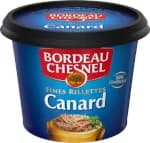
Not recommended
Rillettes and pâtés are among the products particularly likely to be contaminated with listeria.
If the product is refrigerated, meaning it can only be stored in the refrigerator, it should be avoided during pregnancy.
Conversely, if the product can be stored outside the refrigerator (in a terrine or canned, for example), it can be eaten shortly after opening.
Refrigerated rillettes (sold in the chilled section) have not undergone sufficient sterilization to eliminate listeria. The bacterium can multiply even at low temperatures, making these products risky for pregnant women.
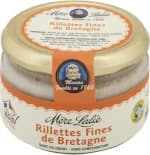
OK, shortly after opening
If the product is non-refrigerated, meaning it can be stored outside the refrigerator (in a terrine or canned, for example), it can be eaten safely during pregnancy.
Conversely, if the product is refrigerated and can only be stored in the refrigerator, it should be avoided by pregnant women.
Canned rillettes (jar or tin) have undergone high-temperature sterilization that destroys listeria and all pathogens. They are therefore safe as long as the jar is intact.
After opening, eat the rillettes quickly (within 24 to 48 hours) and store them in the refrigerator. Sterilization no longer provides protection once the container is opened.
Liver-based meat products generally contain high concentrations of vitamin A.
Game meat may contain traces of lead.

Not recommended
Game meat may contain traces of lead, which is neurotoxic to the fetus.
As a precaution, it is recommended not to eat game during pregnancy.
Lead comes from ammunition used in hunting. Even when well cooked, game meat may contain invisible lead fragments. ANSES recommends that pregnant women and children completely avoid large game meat (wild boar, roe deer, deer).
If you eat farmed game (not hunted), the lead-related risk is significantly lower. However, like all meat, it must be well cooked to prevent toxoplasmosis.
Fish is a particularly recommended food during pregnancy. It is a good source of protein, fatty acids (DHA in particular) and certain essential nutrients.

Recommended
Rich in omega-3 and low in mercury, mackerel is one of the best possible protein choices during pregnancy.
It can be eaten as often as desired.
If you wish to eat raw fish while pregnant, simply make sure the product has been frozen. In Europe, freezing is mandatory for all fish preparations intended to be eaten raw.

Up to 3 times per week
Canned tuna (skipjack): canned tuna is generally skipjack, a smaller species less concentrated in mercury. It can be eaten up to 3 times per week.
Fresh tuna (albacore, bluefin tuna): these larger species accumulate more mercury. The FDA recommends limiting fresh tuna consumption to 1 serving per week.
If you wish to eat raw fish while pregnant, simply make sure the product has been frozen. In Europe, freezing is mandatory for all fish preparations intended to be eaten raw.

Not recommended
Swordfish is a fish particularly likely to contain mercury, a compound toxic to the fetus.
It is recommended to avoid swordfish and all large predatory fish (shark, marlin) during pregnancy.
Methylmercury is a neurotoxin that accumulates in large predatory fish at the top of the food chain. It crosses the placenta and can impair the fetal brain development.
Opt for small oily fish (sardine, mackerel, herring) that are rich in omega-3 and very low in mercury. These fish offer the same nutritional benefits without the mercury risks.
Not recommended, except cooked
Raw oysters present a risk of listeria contamination and should be avoided during pregnancy.
Beyond listeria, raw oysters can also be contaminated by norovirus, hepatitis A, or the Vibrio bacterium. These pathogens are destroyed by cooking but not by lemon juice or vinegar.
Cooked oysters (baked au gratin, in soup, poached) are safe and are a good source of zinc and iron, two important nutrients during pregnancy.
No risk, however, if they are eaten cooked (baked au gratin, for example).
Raw or undercooked fish (including sushi) does not appear to be particularly exposed to the risk of listeria.

OK if the fish has been frozen
Raw fish such as sushi does not appear to present a particular risk of listeriosis according to available epidemiological data (raw fish is not a frequent vector of listeriosis outbreaks, unlike cold cuts or soft cheeses).
In Europe, freezing is mandatory for fish intended to be eaten raw (EU Regulation 853/2004), which eliminates parasitic risk (Anisakis). However, it is important to ensure the product's freshness and cold chain compliance, as freezing does not eliminate bacteria.
Most health authorities (ACOG, NHS, FDA) recommend as a precaution to prefer cooked fish during pregnancy.
Cod liver may contain heavy metals; it is generally recommended to avoid it during pregnancy.
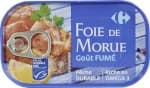
Rather not recommended
Cod liver may contain heavy metals; it is recommended to avoid it during pregnancy, although occasional consumption does not pose a problem.
Cod liver is a filtering organ that concentrates environmental pollutants: heavy metals (mercury, cadmium), dioxins, and PCBs. These contaminants can cross the placenta and affect fetal development.
Additionally, cod liver is very rich in vitamin A (retinol), which at high doses can be teratogenic (risk of fetal malformations). For the same reason, cod liver oil supplements are not recommended during pregnancy.
If you are looking for a source of omega-3, opt for small oily fish (sardine, mackerel, herring) or a purified fish oil supplement (not cod liver oil).
Based on current knowledge, we believe it is reasonable to limit caffeine consumption during pregnancy to 200-300mg per day (2 to 3 cups maximum).

2-3 cups per day
Coffee can be consumed safely if the total caffeine intake does not exceed 200-300 mg per day (2 to 3 cups). This threshold is consistent with the recommendations of EFSA (≤ 200 mg), WHO (< 300 mg), NHS (≤ 200 mg), and Health Canada (≤ 300 mg).
Caffeine crosses the placenta and the fetus metabolizes it much more slowly than adults. Excessive consumption has been associated with an increased risk of miscarriage and low birth weight in several studies.
Note: caffeine is not found only in coffee. Tea, cola drinks, chocolate, and certain medications also contain caffeine. It is the total amount of caffeine that matters, from all sources combined.
Guidelines: an espresso contains about 80 mg of caffeine, a drip coffee 100-150 mg, a black tea 50 mg, a cola 35 mg. Take all these sources into account to stay below the 200-300 mg per day threshold.
Alcohol consumption during pregnancy is dangerous for the fetus. There is no safe level of consumption.
Absolutely avoid
Drinking alcohol during pregnancy is dangerous for the fetus, including champagne.
There is no safe level of consumption, even occasional or in small amounts, regardless of the type of alcohol consumed.
Alcohol crosses the placenta and directly reaches the fetus, whose immature liver cannot metabolize it. Alcohol exposure can cause Fetal Alcohol Spectrum Disorder (FASD), the leading cause of non-genetic intellectual disability.
The health authority message is clear: zero alcohol during pregnancy. This includes champagne, wine, beer, and spirits. For celebrations, opt for non-alcoholic alternatives such as fruit juices, mocktails, or alcohol-free champagne.
Sprouted seeds have been frequently associated with listeria cases and should be avoided as a precaution during pregnancy.
There are ongoing discussions about soy consumption during pregnancy related to the presence of phytoestrogens.
There may be a link between excessive licorice consumption and child development after birth.
Some studies suggest that raspberry leaf infusions may reduce the duration of the second stage of labor, but the evidence remains limited and inconclusive (Bowman et al., 2021). No adverse effects have been reported. As a precaution, it is generally recommended not to consume them before 32 weeks of pregnancy.
Infusions made from this plant have demonstrated toxicity to the fetus and should be avoided during pregnancy.
Our recommendations are based on a comparative analysis of official guidelines from 4 countries, cross-referenced with the most recent scientific literature.
| Country | Source |
|---|---|
| France | Santé publique France — Pregnancy nutrition guide |
| United Kingdom | NHS — Foods to avoid in pregnancy |
| United States | FoodSafety.gov — People at risk: Pregnant women |
| Canada | Health Canada — Healthy pregnancy guide |
Subscribe to our newsletter!
Get tips and advice to support you through your pregnancy!
The information on this site is reviewed by our scientific committee to reflect the latest scientific research and official recommendations. The content on this website is provided for informational purposes only and may not be appropriate or applicable to your particular situation. This website does not provide medical advice and does not replace consultation with a healthcare professional.
Some content published on this site uses open data from the Open Food Facts. Graphic credits: Unsplash, the noon project, icons8.
Copyright © 2021-2026 Mamivia
