By: Dr Elie Servan-Schreiber (Gynécologue-obstétricien) — 21/02/2026
The golden rule: if it is cooked or sterilized, it is allowed. For raw or dried products, the risk depends on the type of product and its preparation method.
You are pregnant and wondering if you can eat foie gras, rillettes, dry sausage, or pâté? The answer depends on the preparation method. The two main risks are toxoplasmosis (parasitic, linked to raw or insufficiently processed meat) and listeriosis (bacterial, linked to poorly stored fresh products). A product cooked through above 70°C or sterilized in a can eliminates both risks.
In practice: canned foie gras, sterilized rillettes, jarred pâté, cooked ham, mortadella, and well-cooked lardons are allowed. Dried deli meats like dry sausage or long-aged raw ham present low risk. However, uncooked chorizo, salami, deli-counter pâté, and fresh rillettes are not recommended. Let us detail all of this product by product.
Two infectious agents explain the restrictions on deli meats during pregnancy:
Toxoplasmosis is a parasitic infection caused by Toxoplasma gondii. The parasite can be present in raw or insufficiently cooked meat. Approximately 44% of pregnant women in France are seronegative for toxoplasmosis (not immune), according to French Public Health Agency. If you are part of this group, you are at risk when consuming raw or dried meat.
Dry sausage, salami, chorizo, and raw ham are raw meats that are dried or smoked. The aging duration plays an important role: studies have shown that the parasite Toxoplasma gondii does not survive prolonged aging of 12 months or more (Genchi et al., 2017). Dry sausage and long-aged raw ham (such as Parma, Serrano gran reserva) therefore present a very low risk. However, for short-aged deli meats (salami, chorizo), the risk is not ruled out. Cooking through above 67°C or prolonged freezing at -20°C for at least 3 days eliminates the parasite. This is why toxoplasmosis serology is part of the early pregnancy workup: if you are immune, the risk is zero.
Listeriosis is a bacterial infection caused by Listeria monocytogenes. This bacterium thrives particularly in fresh products sold at the deli counter, artisanal pâtés, rillettes from the refrigerated section, and homemade terrines. Unlike most bacteria, Listeria can multiply in the refrigerator. Sterilization (canned, jarred) and industrial pasteurization completely eliminate this bacterium.
Approximately 400 cases of listeriosis are reported each year in France. Pregnant women are a high-risk group: they are 20 times more likely to contract listeriosis than the general population. The consequences can be severe: miscarriage, premature delivery, or even neonatal infection.
Here is a complete summary of all deli meat and foie gras products, with their verdict during pregnancy:
Foie gras is one of the most sought-after products during the holiday season, and it is also one of the most questioned by pregnant women. Rest assured: yes, you can eat foie gras while pregnant, but not just any kind.
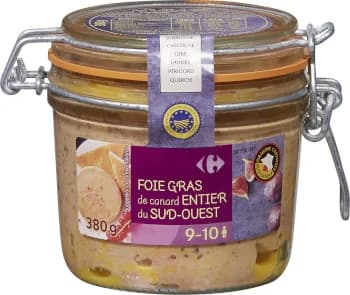
Cooked foie gras (canned) is sterilized at over 100°C. It can be stored for several months at room temperature. This is the safest version during pregnancy: no risk of listeria or toxoplasmosis. It is easily recognized: sold in a glass jar or metal can, in the grocery aisle (not the refrigerated section).
Semi-cooked pasteurized foie gras (industrial) is cooked between 70 and 85°C. When produced industrially, the pasteurization process is controlled and sufficient to eliminate pathogenic bacteria. It is sold vacuum-packed or in jars in the refrigerated section and bears the label "pasteurized" on the packaging. This version is allowed during pregnancy.
Artisanal or homemade semi-cooked foie gras is problematic. The cooking temperature is not always precisely controlled. Foie gras prepared by a local producer, an artisanal caterer, or your grandmother does not offer the same guarantees as an industrial pasteurized product. As a precaution, it is not recommended during pregnancy.
Fresh (raw) foie gras is simply raw meat. It is prohibited as-is during pregnancy.
Pan-seared foie gras is a classic starter in gourmet restaurants. It is allowed during pregnancy provided it is cooked through, and not simply quickly seared. Pan-seared foie gras must be well browned on each side and cooked evenly inside -- not pink in the center. At a restaurant, do not hesitate to request extended cooking.
To choose a safe foie gras during pregnancy, check for the following labels on the packaging:
Foie gras provides approximately 450 calories per 100 g. It is a food rich in fats, two-thirds of which are monounsaturated fatty acids, generally favorable for cardiovascular function.
Foie gras is also an important source of iron, an essential nutrient during pregnancy. Iron deficiencies are extremely common in pregnant women due to increased blood volume and peripheral consumption. Foie gras is both a significant and enjoyable source of iron.
Caution regarding vitamin A. The liver is the storage organ for vitamin A (retinol) in animals. Foie gras contains approximately 3,300 IU of vitamin A per 100 g. Above 10,000 IU per day, there is a teratogenic risk (fetal malformations), particularly within the 60 days following conception, according to ANSES data. The recommended daily dose does not exceed 15,000 IU. In practice, a reasonable portion of foie gras (50 to 80 g) once or twice a week remains perfectly acceptable. Vitamin A derivatives are also found in isotretinoin (Accutane), an acne treatment contraindicated during pregnancy.
Foie gras is also high in salt (approximately one-third of the recommended daily intake per 100 g). During pregnancy, excess salt can worsen edema and water retention, especially in the third trimester. In cases of high blood pressure or pre-eclampsia, consumption should be very limited.
Rillettes are one of the deli meat products most sought after by pregnant women -- and yet, the answer is rarely clear. Can you eat rillettes while pregnant? The answer depends entirely on the preservation method.
Yes, you can eat rillettes while pregnant if they are sold in a sterilized can (glass jar or metal tin, stored at room temperature). The sterilization process, which heats the product above 100°C for several minutes, eliminates all traces of Listeria monocytogenes and Toxoplasma gondii. These rillettes are safe as long as the jar is unopened. After opening, consume within 48 hours and store in the refrigerator.
No, rillettes sold at the deli counter (butcher, market, caterer) or in the refrigerated section of the supermarket are not recommended during pregnancy. These products have not been sterilized and are exposed to contamination risk by Listeria, particularly during handling and slicing. The risk is all the greater because Listeria can multiply in the refrigerator.
The same rules apply to fish rillettes. Canned sterilized salmon, tuna, or mackerel rillettes are allowed. Fresh, artisanal, or deli-counter fish rillettes should be avoided. Always check for the "sterilized" label on the packaging.
Look for the label "sterilized" or "conserve" on the packaging. If the product is on the ambient shelf (grocery aisle), that is a good sign: it has been sterilized. If it is in the refrigerated section, question it. When in doubt, choose the jarred version.
Dry sausage, salami, and chorizo belong to the family of dried or fermented deli meats. They are made from raw minced meat, seasoned, then dried or fermented for several weeks. The meat is not cooked during this process, but the drying duration makes a real difference.
Dry sausage (saucisson sec) benefits from a long drying process that greatly reduces water activity, making the product very unfavorable for Listeria growth. Health Canada actually classifies dried and salted deli meats among "safer foods" for pregnant women. American epidemiological data report no cases of listeriosis associated with dried deli meats. Dry sausage can be consumed during pregnancy.
Salami and chorizo, on the other hand, often have shorter fermentation and drying periods. The risk of toxoplasmosis is not entirely ruled out if you are not immune (negative serology at the beginning of pregnancy). They are therefore not recommended when raw.
If chorizo (or sausage, or salami) is incorporated into a dish cooked at high temperature -- for example a pizza baked in the oven, a gratin, or a slow-cooked dish -- the risk is eliminated. Cooking above 70°C at the core destroys the parasite. You can therefore eat a well-cooked chorizo pizza during pregnancy.
If your toxoplasmosis serology is positive (you contracted toxoplasmosis before pregnancy), the risk associated with salami and chorizo is considerably reduced. Dry sausage, for its part, presents low risk regardless of your serology. Discuss it with your doctor or midwife.
Long-aged raw ham (12 months and more), such as Parma ham or Serrano gran reserva, presents a very low risk: studies have shown the absence of viable parasites after this aging period (Genchi et al., 2017). It can be consumed during pregnancy.
However, shorter-aged raw hams (industrial raw ham, some Bayonne hams) do not benefit from the same guarantee. If in doubt about the aging duration, prior freezing (-20°C for 3 days) inactivates the parasite Toxoplasma gondii.
Yes, cooked ham is allowed during pregnancy. It is cooked during manufacturing by steaming or steam-cooking at temperatures above 70°C. Cooked ham during pregnancy poses no risk, whether sold vacuum-packed or at the deli counter. However, prefer industrially vacuum-packed versions and consume quickly after opening.
Turkey ham and chicken ham are also cooked during their manufacturing. They are allowed during pregnancy under the same conditions as regular cooked ham.
The rules for pâté and terrine during pregnancy follow the same logic as for rillettes: it all depends on the preservation method.
Yes, you can eat pâté while pregnant if it is in a sterilized can. Canned pâté sold in the grocery aisle has been sterilized at over 100°C, eliminating all pathogenic bacteria, including Listeria monocytogenes. This applies to country pâtés, liver pâtés, and poultry pâtés in cans.
No, pâté sold at the deli counter (butcher, market), in the refrigerated section, or homemade is not recommended during pregnancy. These products are vulnerable to contamination by Listeria, which can multiply in refrigerated products even before the expiration date. Fresh terrines, whether meat, fish, or vegetable, present the same risk.
Terrine during pregnancy follows exactly the same rules. In a sterilized can, it is allowed. Fresh or artisanal, it is not recommended. Jarred terrine sold on the ambient shelf has been sterilized and poses no risk.
Liver pâté (pork or poultry) contains significant amounts of vitamin A, like foie gras. In a sterilized can, it is allowed from a microbiological standpoint, but consumption should be limited to one or two servings per week to avoid exceeding recommended vitamin A intake (teratogenic risk above 10,000 IU per day).
Yes, you can eat mortadella while pregnant. Mortadella is an Italian deli meat that is cooked during manufacturing. It undergoes a steaming process at temperatures between 70 and 90°C for several hours. This prolonged cooking eliminates the risks of toxoplasmosis and listeriosis.
Mortadella thus differs from dry sausage or salami, which are raw dried meats. It is more comparable to cooked ham in terms of food safety during pregnancy. You can consume it in a sandwich, a salad, or as an appetizer without any particular risk.
As with any deli meat product, prefer vacuum-packed mortadella (industrial packaging) rather than deli-counter sliced, and consume it quickly after opening. Keep it refrigerated and follow the expiration date.
The Christmas and New Year period is when the question of deli meats during pregnancy arises most acutely. Between foie gras platters, charcuterie boards, artisanal terrines, and homemade rillettes, temptations are numerous. Here are some practical tips:
Yes, it is tradition. Yes, your grandmother ate it during all her pregnancies and "nobody was the worse for it." Nevertheless, current recommendations are clear. Simply explain that you are following your doctor's advice. Most relatives will understand if you explain it calmly. Do not hesitate to bring your own canned foie gras if you know that the family meal will only offer artisanal versions.
Do not hesitate to ask the server questions:
Quality restaurants are familiar with these questions and will be able to answer precisely. When in doubt, choose a different starter. For more tips on eating during the holidays, see our guides on cheeses allowed during pregnancy and shrimp and seafood during pregnancy.
"The year-end holidays are always a delicate time for my pregnant patients: artisanal foie gras, charcuterie boards, homemade rillettes... temptations are everywhere. My advice is to distinguish between preparation methods: canned foie gras, sterilized jarred rillettes, cooked ham, mortadella, and dry sausage are perfectly allowed. Long-aged raw ham (Parma, Serrano) also presents very low risk. However, deli-counter pâté, artisanal foie gras, salami, and uncooked chorizo should be avoided. Toxoplasmosis and listeriosis are rare, but their consequences during pregnancy can be severe. And do not forget: foie gras is rich in vitamin A. Consume it in moderation, once or twice a week, to stay below the threshold of 10,000 IU per day."
-- Dr Elie Servan-Schreiber, obstetrician-gynecologist
Yes, cooked foie gras (canned or in a sterilized jar) is allowed during pregnancy. Sterilization above 100°C destroys all bacteria, including Listeria monocytogenes. Consume in moderation due to its high vitamin A and salt content (1 to 2 servings per week maximum).
Industrial pasteurized semi-cooked foie gras (sold in jars or vacuum-packed with the label “pasteurized”) is allowed. However, artisanal, homemade, or producer-direct semi-cooked foie gras is not recommended, as the cooking temperature is not guaranteed.
Yes, provided they are in a sterilized can (glass jar or metal tin). Rillettes sold at the deli counter, in the refrigerated section, or artisanal rillettes are not recommended due to the risk of listeriosis. Check for the “sterilized” label on the packaging. After opening, consume within 48 hours.
No, dry sausage can be consumed during pregnancy. Its long drying process reduces water activity and makes it very unfavorable for Listeria growth. Health Canada classifies dried and salted deli meats among “safer foods” for pregnant women, and American epidemiological data report no cases of listeriosis associated with dried deli meats.
Yes, mortadella is allowed during pregnancy. Unlike sausage or salami, mortadella is cooked during manufacturing by steaming at temperatures of 70 to 90°C for several hours. This process eliminates the risks of toxoplasmosis and listeriosis.
Canned sterilized pâté (jar or tin) is allowed during pregnancy. Pâté sold at the deli counter, fresh, or homemade is not recommended due to the risk of Listeria contamination. For liver pâté, limit consumption to 1-2 times per week due to vitamin A content.
Long-aged raw ham (12 months and more, such as Parma, Serrano gran reserva) presents a very low risk: studies have shown the absence of viable parasites after this aging period. For shorter-aged raw hams, the risk is not entirely ruled out. When in doubt, prior freezing (−20°C for 3 days) inactivates the parasite.
The liver is the storage organ for vitamin A (retinol) in animals. Duck or goose foie gras contains approximately 3,300 IU of vitamin A per 100 g. Excess vitamin A (above 10,000 IU/day) can be teratogenic, meaning it can cause fetal malformations, especially within the first 60 days following conception.
Raw or dried chorizo is not recommended during pregnancy (raw dried meat, toxoplasmosis risk). However, chorizo cooked in a hot dish (pizza, gratin, slow-cooked dish) above 70°C no longer poses a risk because cooking destroys the parasite Toxoplasma gondii.
Sterilized canned terrine is allowed during pregnancy. Fresh, artisanal, or deli-counter terrine is not recommended due to the risk of listeriosis. As with rillettes and pâté, check for the label “sterilized” or “conserve” on the packaging.
Subscribe to our newsletter!
Get tips and advice to support you through your pregnancy!
The information on this site is reviewed by our scientific committee to reflect the latest scientific research and official recommendations. The content on this website is provided for informational purposes only and may not be appropriate or applicable to your particular situation. This website does not provide medical advice and does not replace consultation with a healthcare professional.
Some content published on this site uses open data from the Open Food Facts. Graphic credits: Unsplash, the noon project, icons8.
Copyright © 2021-2026 Mamivia
