By: Dr Elie Servan-Schreiber (Gynécologue-obstétricien) — 21/02/2026
Quick verdict
Why fish is essential
Comprehensive summary table
Oily fish: your best allies
Smoked salmon during pregnancy
Mercury: which fish to avoid?
Seafood: mussels, oysters, scallops
Sushi and raw fish during pregnancy
Surimi during pregnancy
How to properly cook fish
Our expert's opinion
Fish during pregnancy is not only allowed, it's excellent. The omega-3s, iodine, vitamin D, and protein it provides are essential for your baby's proper development. According to ANSES, pregnant women should consume 2 servings of fish per week, including at least one serving of oily fish (salmon, sardine, mackerel).
The golden rule is simple: well cooked + avoid large predators rich in mercury (swordfish, shark, marlin). With these two precautions, you can fully enjoy the benefits of fish during your pregnancy. As for seafood during pregnancy, it is also allowed provided it is well cooked.
Fish is one of the best dietary sources of omega-3 fatty acids, particularly DHA (docosahexaenoic acid) and EPA (eicosapentaenoic acid). DHA plays a crucial role in the development of your baby's brain and retina, especially during the third trimester, when brain growth accelerates. According to the Hibbeln et al. (2019) study, children whose mothers regularly consumed fish during pregnancy scored on average +7.7 IQ points higher than children of mothers who did not.
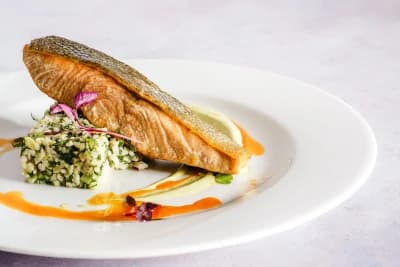
But the benefits of fish during pregnancy don't stop at omega-3s. Fish is also an excellent source of high-quality protein, essential for fetal tissue growth. It also provides vitamin D, necessary for your baby's skeletal development and calcium absorption. The majority of pregnant women in France are deficient in vitamin D, making fish consumption all the more important.
Fish also provides iron, the need for which increases significantly during pregnancy (from 18 mg to 27 mg per day), iodine, essential for proper thyroid function and fetal brain development, as well as selenium, an antioxidant that protects cells. According to ANSES, the recommendation is to consume 2 servings of fish per week, including 1 serving of oily fish, to meet DHA and essential nutrient needs. To learn more about omega-3 supplements, see our article on fish oil during pregnancy.
Here is a complete table of all fish and seafood, with their verdict for pregnant women. This table covers salmon during pregnancy, shrimp during pregnancy, tuna during pregnancy, mussels during pregnancy, oysters during pregnancy, surimi during pregnancy, and many more.
| Fish / Seafood | Verdict | Notes |
|---|---|---|
| Cooked salmon | ✅ Allowed | Excellent source of omega-3 (DHA/EPA). Enjoy it 1 to 2 times per week. |
| Industrial smoked salmon (vacuum-packed) | ⚠️ Tolerated | Consume quickly after opening. Respect the use-by date. Prefer cooked salmon. |
| Artisanal / deli-counter smoked salmon | ❌ Not recommended | Risk of listeria contamination. Avoid throughout pregnancy. |
| Sardine | ✅ Allowed | Excellent omega-3, very low mercury. Ideal during pregnancy. |
| Mackerel | ✅ Allowed | Rich in omega-3 and low in mercury. Mackerel during pregnancy: a very good choice. |
| Cod / Hake | ✅ Allowed | Lean white fish, source of protein. Cod during pregnancy: no risk if well cooked. |
| Sea bream | ✅ Allowed | Flavorful white fish, low in mercury. Sea bream during pregnancy: recommended. |
| Sea bass | ✅ Allowed | Fine fish, well cooked in the oven or steamed. Sea bass during pregnancy: safe. |
| Trout | ✅ Allowed | Similar to salmon, good source of omega-3. Cook thoroughly before eating. |
| Sole | ✅ Allowed | Very digestible white fish, perfect during pregnancy. |
| Fresh tuna | ⚠️ Limit intake | Limit to 150 g/week due to mercury. Tuna during pregnancy: in moderation. |
| Canned tuna | ⚠️ Limit intake | Limit to 2 servings/week. Less mercury than fresh tuna, but stay vigilant. |
| Swordfish | ❌ Prohibited | Very high mercury content. Avoid entirely during pregnancy. |
| Shark | ❌ Prohibited | Apex predator with long lifespan, high mercury bio-accumulation. |
| Marlin | ❌ Prohibited | Same category as swordfish: too high in mercury. |
| Lamprey | ❌ Prohibited | High concentration of mercury and heavy metals. |
| Cooked shrimp | ✅ Allowed | Shrimp during pregnancy: allowed if well cooked. See our dedicated guide. |
| Cooked mussels | ✅ Allowed | Mussels during pregnancy: yes, well cooked (steamed, in cream sauce). Rich in iron and zinc. |
| Cooked oysters | ✅ Allowed | Oysters during pregnancy: allowed only when cooked (gratin, hot). |
| Raw oysters | ❌ Prohibited | Risk of listeriosis and bacterial contamination. Avoid entirely. |
| Cooked scallops | ✅ Allowed | Scallops during pregnancy: pan-seared or baked, cooked thoroughly. |
| Surimi | ✅ Allowed | Surimi during pregnancy: made from cooked and pasteurized fish. No risk. |
| Raw fish sushi | ❌ Prohibited | Sushi during pregnancy: raw fish is prohibited (listeriosis, Anisakis parasites). |
| Cooked fish / vegetarian sushi | ✅ Allowed | Cucumber maki, California roll with surimi, cooked salmon sushi: OK. |
| Taramasalata | ❌ Not recommended | Taramasalata during pregnancy: made from smoked/partially raw fish roe. Avoid. |
| Ceviche | ❌ Prohibited | Raw fish marinated in lemon juice. Lemon does not cook fish. Prohibited during pregnancy. |
Among all the fish you can eat during pregnancy, oily fish are by far the most beneficial. These are mainly salmon, sardine, mackerel, and herring. They contain the highest amounts of DHA and EPA, those famous omega-3 fatty acids your baby needs so much.
DHA is the main component of brain cell membranes. During the third trimester, the fetal brain accumulates approximately 67 mg of DHA per day. A diet rich in oily fish directly provides DHA in its most absorbable form. According to EFSA (European Food Safety Authority), pregnant women should aim for a daily intake of 200 to 300 mg of DHA in addition to the recommended omega-3 intake for the general population.
In practical terms, a 150 g serving of salmon provides approximately 1,500 to 2,000 mg of omega-3 (including about 1,000 mg of DHA), well above the recommended daily dose. Sardines are also an excellent choice: inexpensive, rich in omega-3, calcium (thanks to the small edible bones), and very low in mercury. Mackerel offers a similar nutritional profile, with the advantage of being easy to find canned.
How to cook them? Opt for oven baking, steaming, or cooking in foil, which preserve omega-3s while ensuring thorough cooking. Oven-baked salmon with a drizzle of lemon and herbs, grilled sardines, mackerel in foil with vegetables: all simple and delicious recipes to enjoy all these benefits.
Smoked salmon during pregnancy is probably one of the most debated topics in pregnant women's diets. Can you eat it? Should you avoid it entirely? The answer is nuanced and depends on the type of smoked salmon.
Industrial vacuum-packed smoked salmon is considered tolerated during pregnancy. Industrial manufacturing processes (smoking, vacuum packing, strict sanitary controls) significantly reduce the risk of listeria contamination. However, several precautions are necessary: consume it quickly after opening (within 24 hours), check that the packaging is intact, strictly observe the use-by date, and store it in the coldest part of your refrigerator (between 0 °C and 2 °C).
Artisanal or deli-counter smoked salmon is, on the other hand, not recommended. Sold without airtight packaging, often sliced to order, it is more exposed to handling and ambient air, which increases the risk of bacterial growth. Additionally, storage conditions are less controlled than in industrial settings.
In all cases, cooked salmon is always preferable to smoked salmon during pregnancy. An oven-baked or pan-fried salmon fillet will provide the same nutritional benefits (omega-3, protein, vitamin D) without any bacterial risk. Smoked trout follows exactly the same rules as smoked salmon: industrial vacuum-packed = tolerated, artisanal or deli-counter = not recommended.
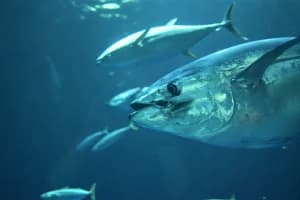
Mercury in fish during pregnancy is a crucial topic. Mercury, and more specifically methylmercury, is a pollutant found in oceans and seas worldwide. This heavy metal is released into the environment by industrial activities (coal power plants, chemical industry) and accumulates in the marine food chain through a process called bio-accumulation.
The principle is simple: small marine organisms absorb mercury from the water. Small fish eat these organisms and accumulate mercury. Large predatory fish eat the small fish and concentrate mercury even further. The larger a fish is, the longer it lives, and the higher it sits in the food chain, the more likely it is to contain significant amounts of mercury.
Methylmercury is neurotoxic to the fetus. Consumed in excessive amounts during pregnancy, it can cross the placental barrier and affect the development of your baby's nervous system. This is why certain fish are strictly prohibited during pregnancy:
Tuna during pregnancy deserves special attention. Tuna is not prohibited, but it must be limited. Fresh tuna (tuna steak) should not exceed 150 g per week. Canned tuna, which is generally light tuna (skipjack) lower in mercury than bluefin tuna, can be consumed up to 2 servings per week maximum. In any case, do not combine fresh tuna and canned tuna in the same week.
The safest fish in terms of mercury are small fish and short-lived fish: sardine, mackerel, salmon, cod, sole, trout, sea bream, sea bass. These fish can be consumed twice a week with complete peace of mind.
Seafood during pregnancy is a frequent source of questions. The good news is that most seafood is allowed during pregnancy, provided you follow one fundamental rule: it must be well cooked. Raw or undercooked seafood poses a risk of contamination from listeria, norovirus, or parasites, which can have serious consequences for the pregnancy.
Mussels during pregnancy are allowed and even recommended when well cooked. Steamed mussels, cooked at boiling point until the shells open, are perfectly safe. Mussels in cream sauce, curried mussels, gratin mussels: all these preparations are safe because cooking eliminates pathogenic bacteria. Mussels are also rich in iron, zinc, and vitamin B12, nutrients that are particularly important during pregnancy. However, avoid raw or lukewarm mussels served in some restaurants.
Oysters during pregnancy are a more delicate case. Raw oysters are strictly prohibited during pregnancy. Oysters are traditionally eaten raw in France, but this way of eating them poses too high a risk of listeriosis and contamination by norovirus or vibriosis. However, cooked oysters (gratin, poached, hot) are allowed, as cooking eliminates pathogens. If you are invited to a festive meal, opt for hot gratin oysters rather than a raw seafood platter.
Scallops during pregnancy are allowed if they are thoroughly cooked. Pan-seared, gratin, or oven-baked, scallops are a delicate and perfectly safe dish for pregnant women. Simply ensure that the flesh is opaque and firm throughout its entire thickness. Avoid scallops served medium-cooked or only seared on the surface, as the center may remain raw.
For shrimp during pregnancy, we have written a dedicated article detailing the precautions to take. In summary: well-cooked shrimp (pink and opaque) are perfectly allowed and are an excellent source of protein and selenium.
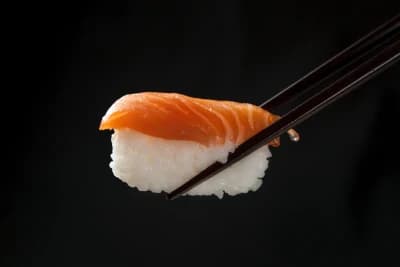
Sushi during pregnancy is probably the most frequently asked question by pregnant women who love Japanese cuisine. The answer is clear: any sushi containing raw fish is prohibited during pregnancy. This includes:
Why this prohibition? Raw fish can harbor the bacterium Listeria monocytogenes, responsible for listeriosis, a rare but potentially serious infection for the fetus (miscarriage, premature birth, neonatal infection). Raw fish can also contain parasites, particularly Anisakis, a worm found in many species of marine fish. In pregnant women, an Anisakis infection can cause intense abdominal pain and allergic reactions. To learn more about parasitic risks, see our article on toxoplasmosis and parasites during pregnancy.
Allowed alternatives: you can absolutely go to a Japanese restaurant while pregnant. Choose cooked fish sushi (cooked shrimp, grilled eel), vegetarian maki (cucumber, avocado, mango), California rolls with surimi (surimi is cooked and pasteurized), or hot dishes like tempura, udon, or ramen. Japanese cuisine is not limited to raw fish.
Taramasalata during pregnancy is also not recommended. Taramasalata is a preparation based on smoked and partially raw fish roe (cod or mullet), mixed with oil and lemon. Since the fish roe is not cooked, taramasalata presents a similar risk to raw fish. Avoid it throughout your pregnancy.
Surimi during pregnancy is allowed. Contrary to a fairly widespread misconception, surimi is not raw fish. Industrial surimi is made from white fish flesh (usually Alaska pollock) that is cooked and pasteurized during the manufacturing process. The fish paste is cooked at high temperature, then shaped, which eliminates any risk of bacterial contamination.
Surimi is therefore a perfectly safe food for pregnant women. It can be eaten cold (in salads, in wraps) or hot (in pasta dishes, in gratins). It is a light and convenient source of protein, although its omega-3 content is much lower than that of real oily fish like salmon or sardines.
A few precautions nonetheless: check the use-by date, keep surimi refrigerated, and consume it quickly after opening. These are standard hygiene precautions applicable to all refrigerated foods during pregnancy.
Cooking fish is your best protection against food-related risks during pregnancy. Proper cooking eliminates listeria, parasites (Anisakis), and other pathogens. Here are the rules to follow:
The internal temperature must reach at least 63 °C (145 °F). This is the temperature at which listeria is destroyed. If you own a kitchen thermometer, this is the most reliable way to check cooking. Insert the probe into the center of the thickest part of the fish.
Visual signs of well-cooked fish: the flesh is opaque throughout its entire thickness (no translucent areas remaining), it flakes easily with a fork, and it has lost its shiny and gelatinous appearance. For shrimp, the flesh should be pink and firm. For mussels and oysters, the shells should have opened during cooking (discard any that remain closed).
Recommended cooking methods:
Preparation methods to avoid: carpaccio (thinly sliced raw fish), tartare (chopped raw fish), gravlax (raw marinated salmon), ceviche (raw fish marinated in lemon), and any preparation where the fish has not reached an internal temperature of 63 °C (145 °F).
To diversify your protein sources during pregnancy, also see our guide on eggs during pregnancy, another excellent source of essential nutrients.
“Fish is one of the most beneficial foods you can eat during your pregnancy. The scientific data is very clear: omega-3s, and particularly DHA, play a fundamental role in fetal brain development. What I tell my patients is that you should definitely not deprive yourself of fish out of fear — on the contrary, not eating enough of it is a much more real risk than listeriosis, which remains exceptionally rare. The rules are simple: cook your fish well, avoid large predators like swordfish or shark, and aim for two servings per week including one of oily fish. If you love sushi, opt for vegetarian maki or cooked fish — it's a good compromise. The goal is to give your baby the best nutrients possible, and fish is part of that.”
— Dr. Elie Servan-Schreiber, physician and founder of bienmangerenceinte.fr
Fish with high mercury content are strictly prohibited during pregnancy: swordfish, shark, marlin, and lamprey. Tuna (fresh or canned) should be limited to 150 g per week. Methylmercury is neurotoxic and can affect fetal brain development. Choose fish low in mercury such as salmon, sardine, mackerel, cod, or sole.
ANSES recommends 2 servings of fish per week during pregnancy, including at least 1 serving of oily fish (salmon, sardine, mackerel, herring). Oily fish provides the omega-3s (DHA/EPA) essential for your baby's brain development. One serving is approximately 150 g of fish.
Industrial vacuum-packed smoked salmon is tolerated during pregnancy, provided you consume it quickly after opening (within 24 hours), check the use-by date, and store it between 0 °C and 2 °C. However, artisanal or deli-counter smoked salmon is not recommended due to the risk of listeriosis. When in doubt, always prefer cooked salmon.
Yes, raw fish is prohibited during pregnancy. This includes raw fish sushi, sashimi, ceviche, fish tartare, and fish carpaccio. The risk is twofold: listeriosis (Listeria monocytogenes bacteria) and parasites (Anisakis). However, cooked fish sushi, vegetarian maki, and California rolls with surimi are allowed.
Yes, mussels are allowed during pregnancy provided they are well cooked. Steamed mussels, cooked at boiling point until the shells open, are perfectly safe. Mussels are rich in iron, zinc, and vitamin B12. However, avoid raw or lukewarm mussels.
Raw oysters are prohibited during pregnancy due to the risk of listeriosis and bacterial contamination. However, cooked oysters (gratin, poached, hot) are allowed because cooking eliminates pathogens. If you are invited to a festive meal, opt for hot gratin oysters.
Yes, surimi is allowed during pregnancy. Industrial surimi is made from white fish flesh (Alaska pollock) that is cooked and pasteurized during the manufacturing process. It poses no bacterial risk. Simply check the use-by date and keep it refrigerated.
Canned tuna is allowed but should be limited to 2 servings per week due to its mercury content. Canned tuna is generally light tuna (skipjack), lower in mercury than fresh bluefin tuna. Do not combine fresh tuna and canned tuna in the same week.
Yes, scallops are allowed during pregnancy provided they are thoroughly cooked. Pan-seared, gratin, or oven-baked, they are perfectly safe. Ensure the flesh is opaque and firm throughout its entire thickness. Avoid scallops served medium-cooked or only seared on the surface.
No, taramasalata is not recommended during pregnancy. It is a preparation based on smoked and partially raw fish roe (cod or mullet), mixed with oil and lemon. Since the fish roe is not cooked, taramasalata presents a risk similar to raw fish (listeriosis, parasites). Avoid it throughout your pregnancy.
Subscribe to our newsletter!
Get tips and advice to support you through your pregnancy!
The information on this site is reviewed by our scientific committee to reflect the latest scientific research and official recommendations. The content on this website is provided for informational purposes only and may not be appropriate or applicable to your particular situation. This website does not provide medical advice and does not replace consultation with a healthcare professional.
Some content published on this site uses open data from the Open Food Facts. Graphic credits: Unsplash, the noon project, icons8.
Copyright © 2021-2026 Mamivia
