By: Julia Ebbens (Nutritionniste) — 14/01/2021
The caffeine question
The few herbal teas to avoid during pregnancy
The many benefits
Conclusion
You've probably heard about the discussions surrounding caffeine consumption during pregnancy. Maybe you're considering giving up your daily latte for the full 9 months, but what about drinking tea?
Well, yes you can, but it all depends on the type and the amount.
Here we take stock of tea consumption during pregnancy so you can decide for yourself.
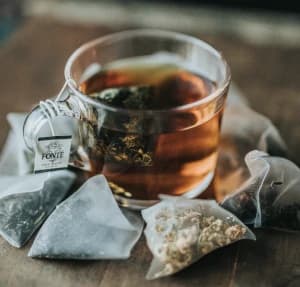
Although there is slight disagreement about the absolute upper limit of daily caffeine intake, most health organizations agree it is around 200 to 300 mg per day.
What does that translate to in terms of daily tea consumption?
Well, the answer varies considerably depending on the type consumed. Most herbal teas can be enjoyed freely, as their average caffeine level is about 0 mg!
Some teas, however, require a bit of moderation.
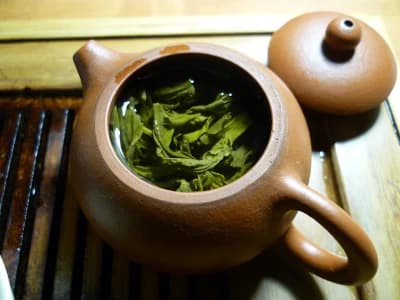
For example, green tea contains about 30 mg per cup (so your limit would be approximately 6 or 7 cups per day). Similarly, Oolong tea has a caffeine content of 40 mg per cup, so a little restraint is in order.
Black tea is a good option when watching your intake as its caffeine content is only 20 mg. So 10 cups a day would be possible without issue (and hopefully sufficient even for the most avid tea drinkers!).
No problem either for white tea lovers (at 20 mg per cup).
On the other hand, South American mate (yerba mate) goes up to 85 mg per cup. That's almost as much as coffee, so take it easy!
The goal, of course, is to always consider your overall caffeine intake, especially if you like to mix and combine coffee and tea. Fortunately, most varieties of green and black tea come in decaffeinated versions, perfect for when you crave a soothing brew before bed.
For some teas, timing is essential. For example, raspberry leaf is not recommended until 32 weeks. Before that, this herbal tea poses a potential risk as it can cause uterine contractions. However, it has been proven (in a randomized controlled trial, the gold standard!) that, consumed after 32 weeks, this herbal tea can shorten the second stage of labor (and that earns it some points, doesn't it?).
Additionally, some less common herbal teas should be entirely avoided throughout the entire pregnancy. Namely, black and blue cohosh, the latter also known as Caulophyllum thalictroides (yes, I hadn't heard of it either!). They not only carry a risk of contractions, but some signs of toxicity to the developing baby have been noted. The safest approach is to abstain.

Finally, passionflower, sometimes found in relaxing herbal teas, should be avoided due to its potential uterus-stimulating properties.
But fortunately, we still have many delicious tea options left!
The benefits are many.
First of all, for many people, the very act of preparing tea is a mindfulness ritual associated with comfort and intimacy, which often provides a moment of pause, a small break in our busy day.
This “break,” a precious help in normal times, should be encouraged during pregnancy, like all forms of self-care.
Furthermore, tea is also packed with antioxidants, particularly in its green and black forms. In fact, multiple studies have illustrated the highly protective nature of green tea compounds such as catechins, which can prevent many chronic conditions, including cardiovascular disease and cognitive decline.
Overall, green tea is an excellent option, as long as we account for our caffeine intake, and let's admit it, green tea addiction is probably easier to avoid than coffee addiction!
When it comes to pregnancy, tea consumption has its specific advantages, and drinking tea is, for example, a good way to stay hydrated when the prospect of plain cold water seems unappealing.
Moreover, you may be able to directly target pregnancy-specific discomforts by choosing the right beverage. Let's look at some of the common pregnancy-related ailments — bet there's an herbal tea for each one?
Your best ally here is probably ginger. The advantage of ginger tea is that it combines essential hydration with the anti-nausea benefits of ginger root. Whether freshly prepared, dried, or in capsule form, the data shows that ginger significantly reduces these unpleasant symptoms.
Some women also find that peppermint relieves digestive issues, but it's best to avoid it if pregnancy triggers a flare-up of acid reflux symptoms.
Interestingly, a little caffeine could prove useful here. A cup of black tea is sometimes the ideal solution to prevent pregnancy-related headaches, which are common due to the hormonal changes that occur.
Many of us already struggle with sleep, but pregnancy often represents an additional challenge!
Don't worry, because we have natural herbal allies for these situations. It's better to avoid chamomile and passionflower, but valerian can help with falling asleep and poses no risk for pregnant women. If it's not to your taste, you can also try rooibos or decaffeinated chai. For both options, a splash of milk softens the drink and promotes quality sleep due to milk's tryptophan content (a precursor to melatonin).
Once again, green tea stands out, particularly in the form of matcha green tea. Here, a slight caffeine intake gives a little boost, but without the post-coffee crash. The naturally present L-theanine also counteracts any caffeine-related jitteriness— it's even the tea of choice of Japanese monks!
We have seen that, overall, most types of tea offer benefits during pregnancy, whether as a stimulant, hydrator, and antioxidant, or for targeted relief of pregnancy-related ailments.
We also know that it is possible to drink several cups before reaching our caffeine quota.
Finally, we learned that it is best to avoid raspberry leaf until 32 weeks, and that passionflower, black and blue cohosh should be avoided entirely.
But ultimately, consuming tea is beneficial during pregnancy, even if it's just for the daily ritual.
Yes, in moderation. Green tea contains 20-30 mg of caffeine per cup. Limit yourself to 2-3 cups per day while counting your total caffeine intake (goal: less than 200 mg/day).
Caffeine-free herbal teas (chamomile, verbena, linden, rooibos) are safe. Avoid sage, ginseng, and licorice in large amounts. Ginger tea helps with nausea.
Yes, tannins in tea reduce the absorption of non-heme iron. Drink your tea outside of meals (at least 1 hour before or after) to avoid interfering with iron absorption, which is important during pregnancy.
2 to 3 cups of tea per day maximum, taking into account your total caffeine consumption (coffee, sodas, chocolate). A cup of black tea contains about 40 mg of caffeine.
Subscribe to our newsletter!
Get tips and advice to support you through your pregnancy!
The information on this site is reviewed by our scientific committee to reflect the latest scientific research and official recommendations. The content on this website is provided for informational purposes only and may not be appropriate or applicable to your particular situation. This website does not provide medical advice and does not replace consultation with a healthcare professional.
Some content published on this site uses open data from the Open Food Facts. Graphic credits: Unsplash, the noon project, icons8.
Copyright © 2021-2026 Mamivia
