By: Julia Ebbens (Nutritionniste) — 21/02/2026
In brief
Most women lose about half of their pregnancy weight in the first 6 weeks after delivery. A reasonable goal is to return to your pre-pregnancy weight within 6 to 12 months. No restrictive diets, especially if you are breastfeeding. Patience, balanced nutrition, and gentle physical activity are your best allies for losing weight after pregnancy in a healthy and sustainable way.
Your body has done something incredible: it carried and nourished a human being for nine months. It is perfectly normal for your weight after delivery to not be the same as before pregnancy. Before trying to lose weight after pregnancy, it is essential to understand what happens naturally in your body.
Immediately after delivery, you lose an average of 5 to 6 kg: the weight of the baby (about 3.3 kg), the placenta (about 700 g), the amniotic fluid (about 800 g), and blood. Over the first 6 weeks that follow, your body continues to lose weight naturally through the elimination of water retained during pregnancy and the decrease in blood volume. A study published in the Journal of Women's Health shows that women lose an average of 50% of their pregnancy weight in these first 6 postpartum weeks.

Your body will probably be different from what it was before pregnancy: your hips may remain slightly wider, stretch marks may have appeared, and that is perfectly normal. Every woman experiences this transformation differently. Do not compare yourself to celebrities who seem to get their pre-pregnancy figure back in a few weeks: they benefit from personal coaches, private chefs, and sometimes digital retouching. For the vast majority of women, getting your body back after pregnancy takes between 6 and 12 months, and that is a perfectly healthy pace.
If you gained weight during pregnancy within the recommended ranges, you have every chance of returning to your weight naturally. To better understand the benchmarks, see our article on weight gain during pregnancy.
Breastfeeding is one of the best natural allies for losing weight after pregnancy. Producing breast milk requires considerable energy: breastfeeding burns between 300 and 500 kcal per day, the equivalent of a moderate workout session. This is a significant caloric expenditure that activates the burning of fat reserves specifically stored during pregnancy for this purpose.
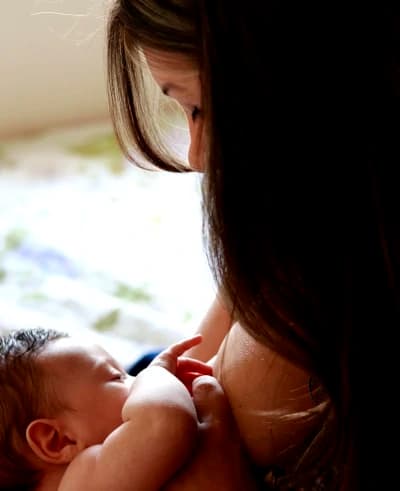
The link between breastfeeding and weight loss is well documented. However, keep in mind that breastfeeding also significantly increases appetite. This is your body's natural response to ensure you produce enough milk. It is therefore important not to fight this hunger, but to satisfy it with nutritious foods.
If you are breastfeeding, never go below 1,800 kcal per day. Too low a caloric intake can reduce your milk production and deprive your baby of essential nutrients. A restrictive postpartum diet is particularly inadvisable during breastfeeding. The ANSES recommends maintaining a diversified and sufficient diet to cover the needs of both mother and infant.
An additional benefit of breastfeeding concerns women who have had gestational diabetes: studies show that breastfeeding has a protective effect against the later development of type 2 diabetes. If this applies to you, see our comprehensive article on gestational diabetes to understand the links between pregnancy and sugar metabolism.
If breastfeeding is not possible or desired, do not feel guilty. Current infant formulas are of excellent quality and your baby will develop very well. You can achieve your weight loss goals through other means.
The guiding principle of postpartum eating is simple: do not follow a restrictive diet. After delivery, your body needs to recover, repair itself, and, if applicable, produce milk. Drastically cutting calories would be counterproductive and potentially dangerous for your health and your baby's. The goal is to eat better, not to eat less.
Protein at every meal. Protein is essential for tissue repair after delivery and provides a lasting feeling of fullness. Include eggs, fish, poultry, legumes, or tofu at every meal. Aim for 1.2 to 1.5 g of protein per kilogram of body weight per day, more if you are breastfeeding.
Complex carbohydrates for sustained energy. Choose low glycemic index foods: sweet potatoes, quinoa, brown rice, sourdough bread, oats. These carbohydrates release their energy gradually and avoid blood sugar spikes followed by energy crashes that lead to snacking. During pregnancy, you may have already adopted these habits, especially if you suffered from pregnancy nausea which disrupts eating habits.
Vegetables in abundance. Rich in fiber, vitamins, and minerals, vegetables should fill half of your plate. They provide volume and fullness for very few calories, and their richness in micronutrients supports your recovery.
Healthy fats. Do not eliminate fats: omega-3s (oily fish, flaxseeds, walnuts), avocado, and olive oil are essential for proper hormonal function and your baby's brain development if you are breastfeeding.
Adequate hydration. Drink at least 2 liters of water per day, and more if you are breastfeeding. Dehydration can be confused with hunger and lead to unnecessary snacking. Water, herbal teas, and broths count toward your daily fluid intake.

Batch cooking, your best ally. With a newborn, time is your most precious resource. Take advantage of moments when the baby is sleeping to prepare several meals in advance. Freezing portions of soups, stews, or complete dishes will save you from falling back on processed meals when fatigue sets in. For nutritious meal ideas, our guide to the ideal breakfast for pregnant women remains perfectly relevant postpartum.
What is best to avoid. Ultra-processed industrial foods, high in added sugars, salt, and saturated fats, do not provide the nutrients you need and promote fat storage. Limit fast sugars (cookies, pastries, sodas) and avoid alcohol, which provides empty calories and can pass into breast milk.
Exercise after delivery is a tremendous lever for getting your figure back, improving your mood, and regaining confidence in your body. But the return to exercise must be gradual and respect the recovery stages of your body. Here is an indicative timeline to guide you.
0 to 6 weeks: rest and gentle walking only. During the first weeks, your body is healing, whether delivery was vaginal or by cesarean section. The only recommended activity is gentle walking, at your own pace, pushing the stroller. It promotes blood circulation and helps fight the baby blues.
6 to 8 weeks: pelvic floor rehabilitation is mandatory. Before any return to exercise, pelvic floor rehabilitation is an essential step. The pelvic floor was heavily stressed during pregnancy and delivery. Rehabilitation with a physiotherapist or a specialized midwife helps prevent urinary incontinence and organ prolapse. Without this rehabilitation, any impact activity (running, jumping) can worsen the damage.
2 to 3 months: gradual return. Once pelvic floor rehabilitation is well underway, you can resume gentle activities: postnatal yoga, pilates, swimming. These disciplines strengthen the body deeply without putting the pelvic floor at risk. This is also the ideal time to try baby yoga, an activity that lets you move while bonding with your baby.

4 to 6 months: moderate exercise. You can now consider light jogging, strength training, or power walking with a stroller. Gradually increase the intensity and duration of sessions. Listen to your body: if you feel pelvic heaviness or urinary leaks, go back to a lower intensity and consult your healthcare professional.
Be careful with traditional ab exercises. Crunches and sit-ups should be avoided until abdominal rehabilitation is complete. They increase intra-abdominal pressure and can worsen diastasis (separation of the rectus abdominis muscles). Opt for planking exercises and hypopressive techniques, always under professional supervision.
The belly is often the main concern of women who want to get their body back after pregnancy. Over nine months, the abdominal muscles stretched to make room for the baby, and the skin was distended. It takes time for everything to return to its place, generally between 6 and 12 months.
Diastasis recti. This phenomenon, which consists of a separation of the two large abdominal muscles along the midline of the belly, affects about 60% of women after delivery. You can test it yourself: lying on your back, knees bent, slightly raise your head. If you feel a gap of more than two fingers above the navel, it is likely that you have diastasis. A physiotherapist can confirm the diagnosis and offer you specific rehabilitation.
Hypopressive exercises rather than traditional abs. Postpartum abdominal rehabilitation relies on hypopressive techniques: exercises that strengthen the deep muscles (transverse abdominis) without increasing pressure on the pelvic floor and the linea alba. These exercises, performed with a specialized physiotherapist, are much more effective and safe than traditional ab exercises for losing the belly after pregnancy.
Patience is key. The belly takes between 6 and 12 months to gradually firm up. The combination of a balanced diet, targeted exercises, and the passage of time will yield lasting results. Beware of promises of a flat belly in a few weeks: they are unrealistic and potentially dangerous.
The impact of stress and lack of sleep on postpartum weight is often underestimated. Yet these two factors play a major role in the body's ability to lose weight.
Cortisol, the stress hormone, promotes fat storage, particularly in the abdominal area. When you are chronically stressed, your body interprets this situation as a danger and holds onto its energy reserves. Moreover, stress activates a brain reward circuit that drives consumption of calorie-rich and sugary foods, making weight loss even more difficult.
Lack of sleep, inevitable with a newborn, worsens the situation. Sleep deprivation increases the production of ghrelin, the hunger hormone, and decreases that of leptin, the satiety hormone. The result: you are hungrier, less satisfied, and your body craves calorie-dense foods to compensate for fatigue.
Here are some strategies to mitigate these effects:
"After delivery, your nutritional priority is not weight loss: it is recovery. Your body has drawn on its reserves for nine months and it needs to be recharged. By focusing on a nutrient-rich diet — quality protein, varied vegetables, good fats, and whole grains — weight loss will follow naturally. Women who breastfeed have a metabolic advantage, but they must eat enough to maintain quality milk production. I recommend never going below 1,800 kcal per day while breastfeeding, and not trying to lose more than 500 g to 1 kg per month. It is a marathon, not a sprint."
On average, it takes 6 to 12 months to return to your pre-pregnancy weight. Half of the weight gained during pregnancy is generally lost in the first 6 weeks. Do not try to speed up the process: a loss of 500 g to 1 kg per month is a healthy and sustainable pace.
A restrictive diet is strongly discouraged during breastfeeding. It can reduce milk production and deprive your baby of essential nutrients. Maintain an intake of at least 1,800 kcal per day and focus on the quality of your diet rather than the quantity.
Gentle walking can be resumed from the first days. For any other physical activity, you must wait for pelvic floor rehabilitation, generally between 6 and 8 weeks postpartum. Gradual return to exercise (yoga, pilates, swimming) is recommended between 2 and 3 months, and moderate exercise (jogging, strength training) from 4 to 6 months.
The belly takes 6 to 12 months to firm up. About 60% of women have diastasis recti after delivery. Specific rehabilitation with a physiotherapist, based on hypopressive exercises, is more effective and safer than traditional ab exercises. Patience and consistency are key.
Yes, breastfeeding burns between 300 and 500 kcal per day and activates the burning of fat stored during pregnancy. However, it also increases appetite. The effect on weight loss depends on overall diet. Breastfeeding alone is not enough, but it is a valuable ally as part of a balanced diet.
Needs vary for each woman. On average, expect about 2,000 kcal per day without breastfeeding, and 2,300 to 2,500 kcal per day if you are breastfeeding. Never go below 1,800 kcal if you are breastfeeding, at the risk of compromising your milk production and your health.
In France, pelvic floor rehabilitation is systematically prescribed after delivery, whether it was vaginal or by cesarean. It is essential before any return to exercise to prevent urinary incontinence and prolapse. It is done with a midwife or specialized physiotherapist, generally starting from 6 to 8 weeks postpartum.
Yes, it is perfectly normal. The body changes after pregnancy: the hips may remain slightly wider, the breasts change, and some women keep 1 to 2 extra kg permanently. There is nothing abnormal about this and it should not be a source of worry. What matters is feeling healthy and fit.
Subscribe to our newsletter!
Get tips and advice to support you through your pregnancy!
The information on this site is reviewed by our scientific committee to reflect the latest scientific research and official recommendations. The content on this website is provided for informational purposes only and may not be appropriate or applicable to your particular situation. This website does not provide medical advice and does not replace consultation with a healthcare professional.
Some content published on this site uses open data from the Open Food Facts. Graphic credits: Unsplash, the noon project, icons8.
Copyright © 2021-2026 Mamivia
